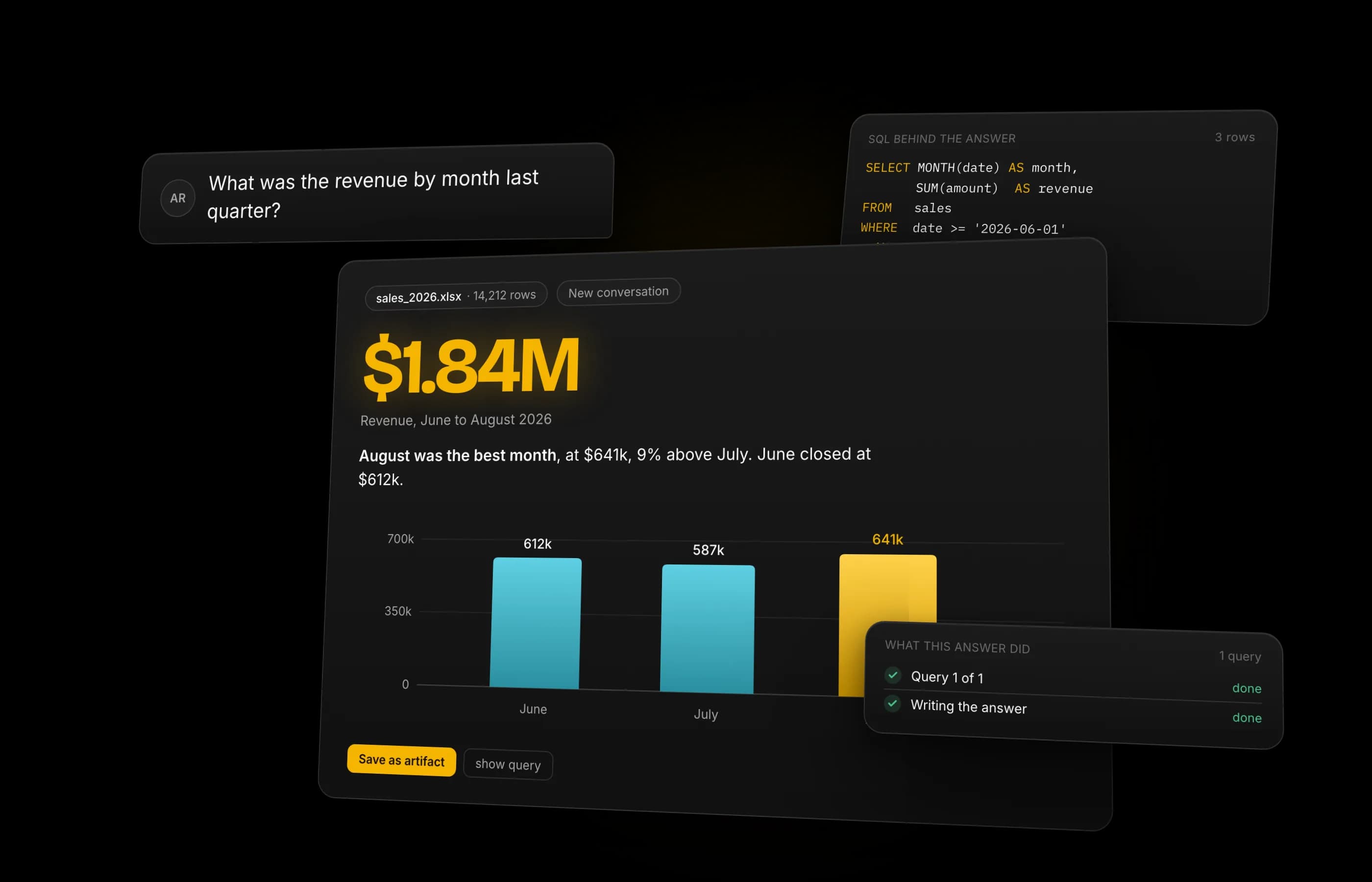
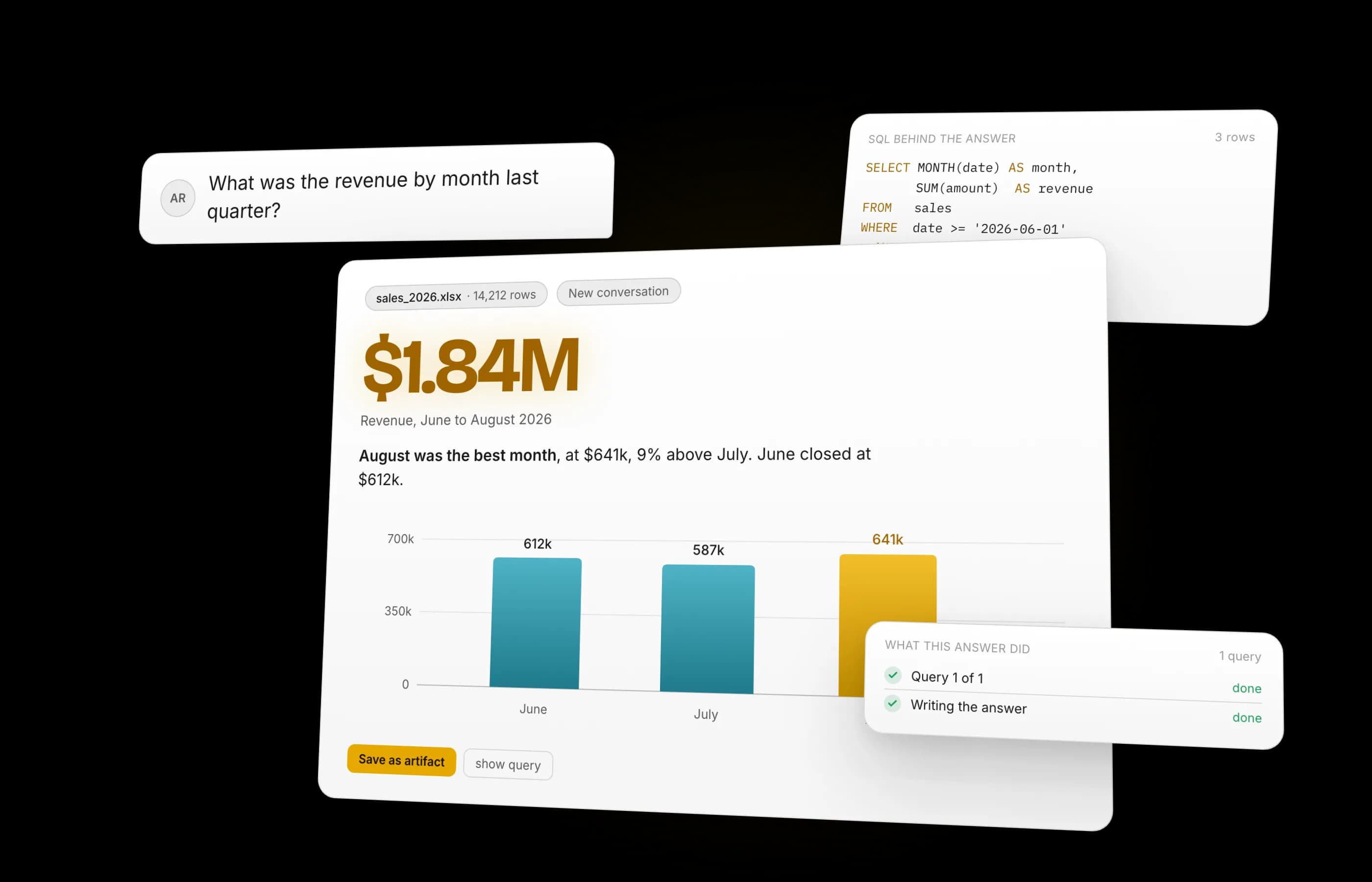
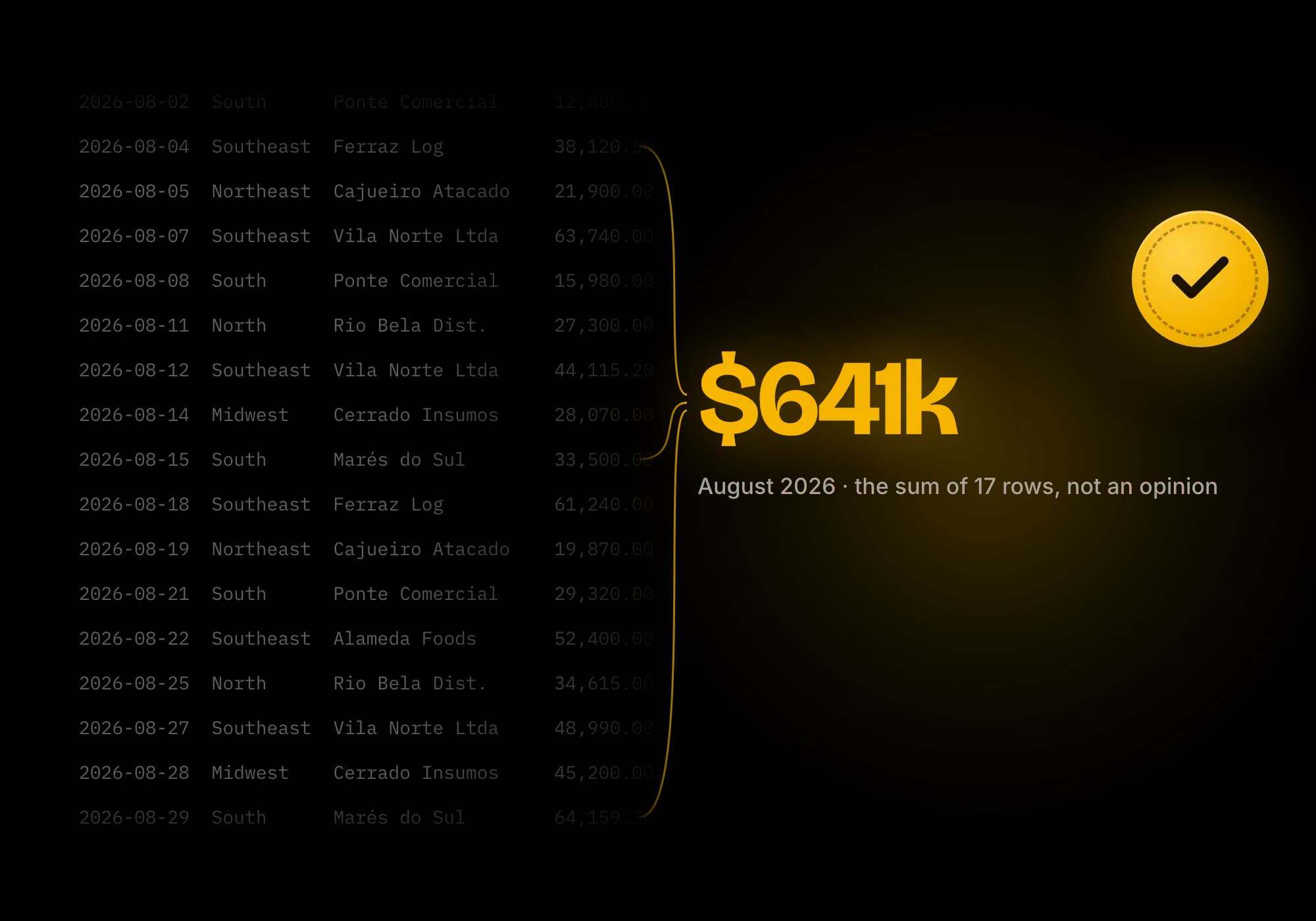
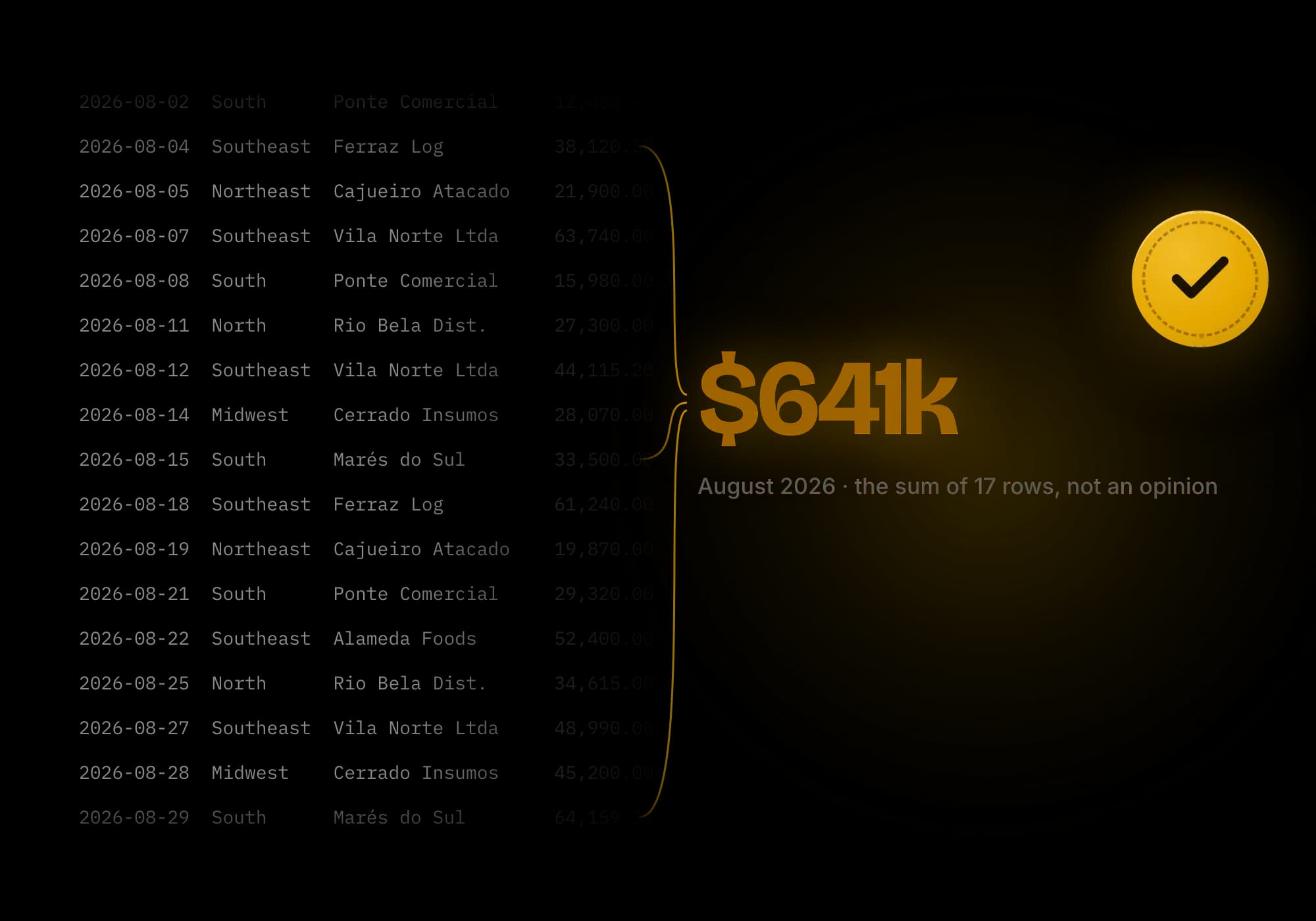
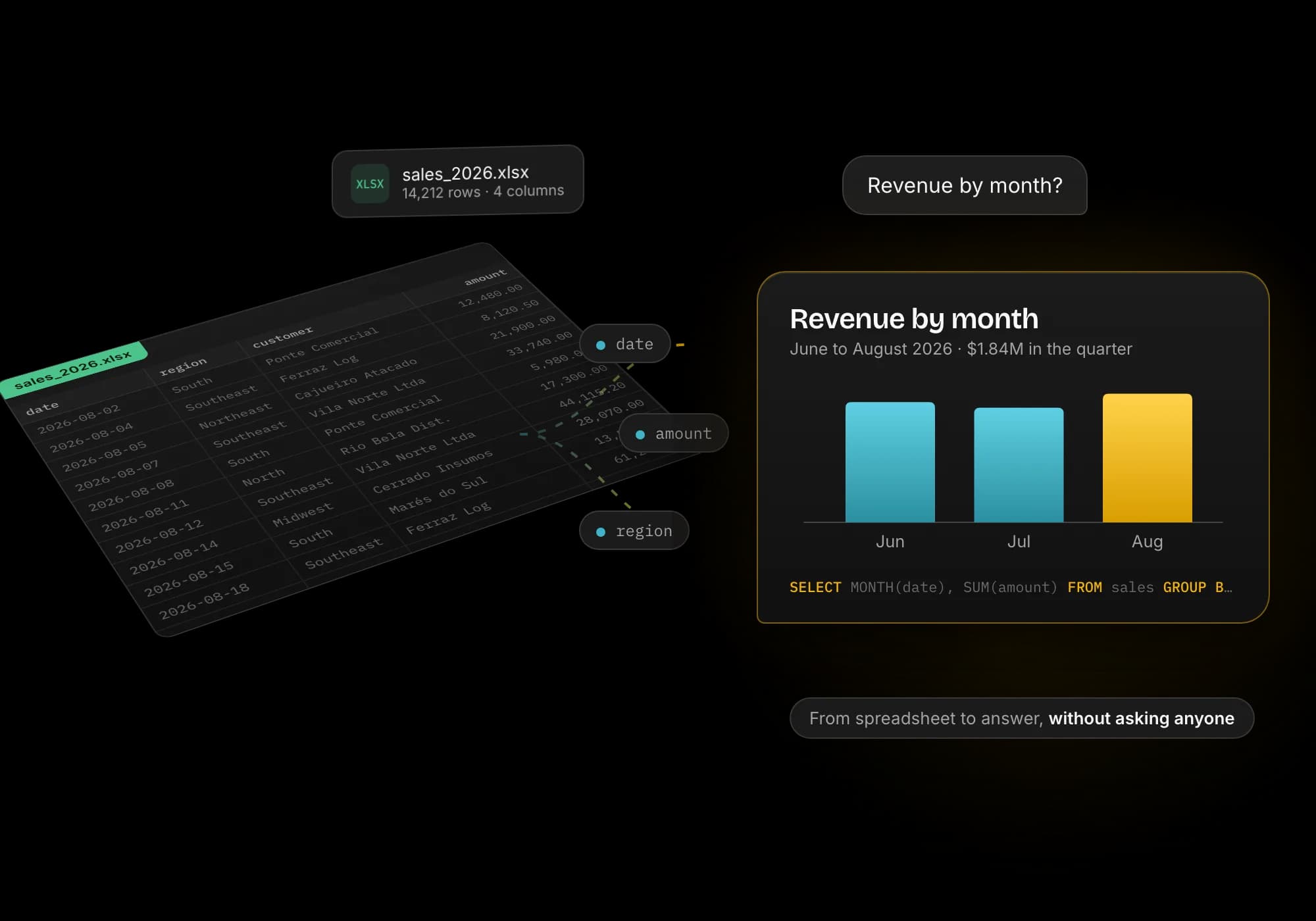
Every answer is born from a query that ran over your rows, and the written reading is checked against the result: a figure it states has to be there. When one is not, the warning is on the answer and the table is the answer. Whoever knows the data can open the query and audit it; whoever does not can trust it because it can be audited.
Source profile: the schema is read and described before the query is written.
Read-only sandbox: the result travels within a size budget, not a row count.
Query repair: a query that fails is fixed and run again, and the checklist shows what was tried.
Grounding check: a figure in the reading that is not in the result gets a warning on the answer.
Autonomy
Answers without waiting on anyone
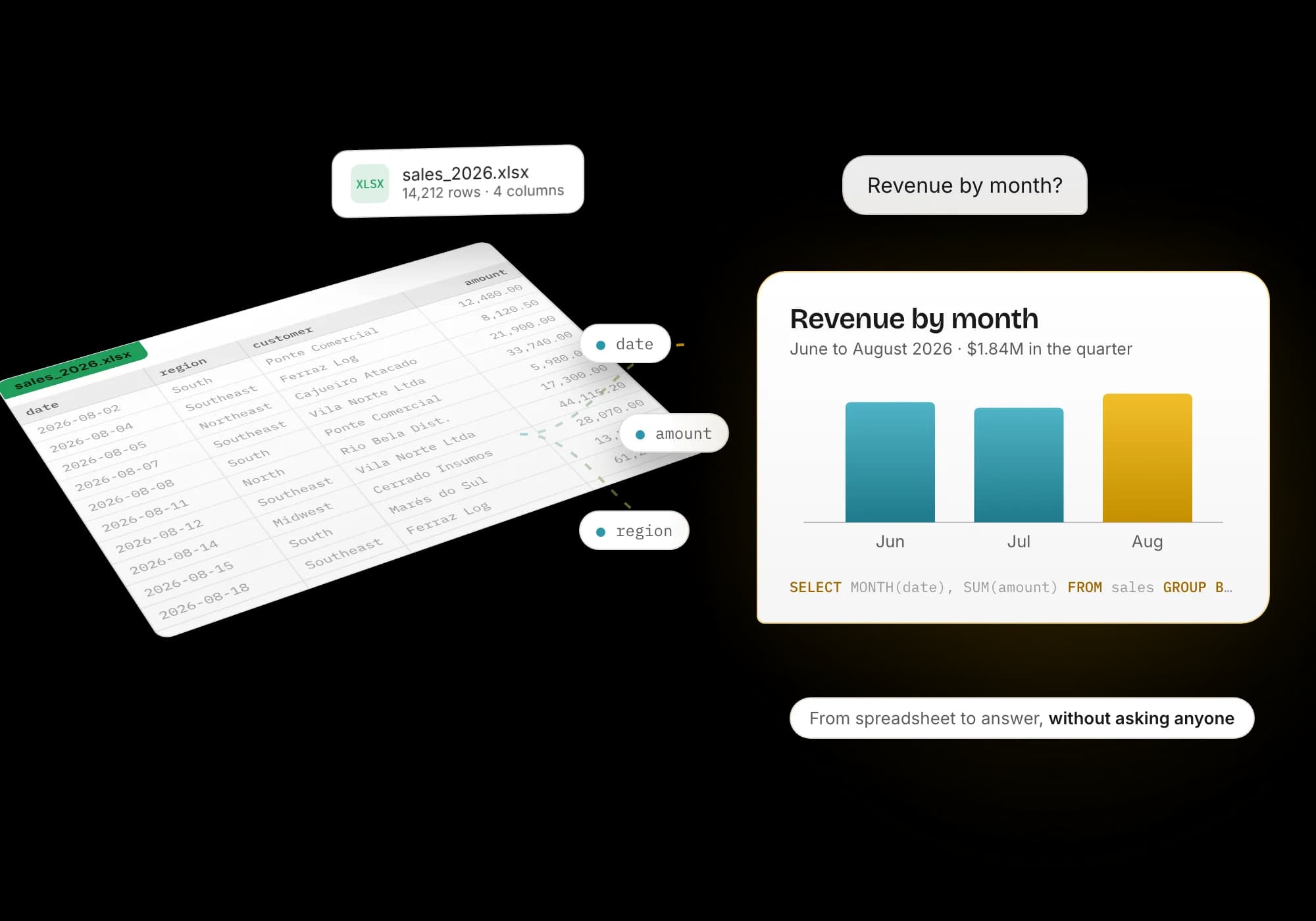
Drag the file in or paste the Postgres or MySQL connection, and the schema is read and described on the spot, with up to three suggested questions to start from. Ask the way you would ask a colleague. If the query fails, the AI fixes it and runs again, and the checklist under the answer shows what was tried.
Sharing
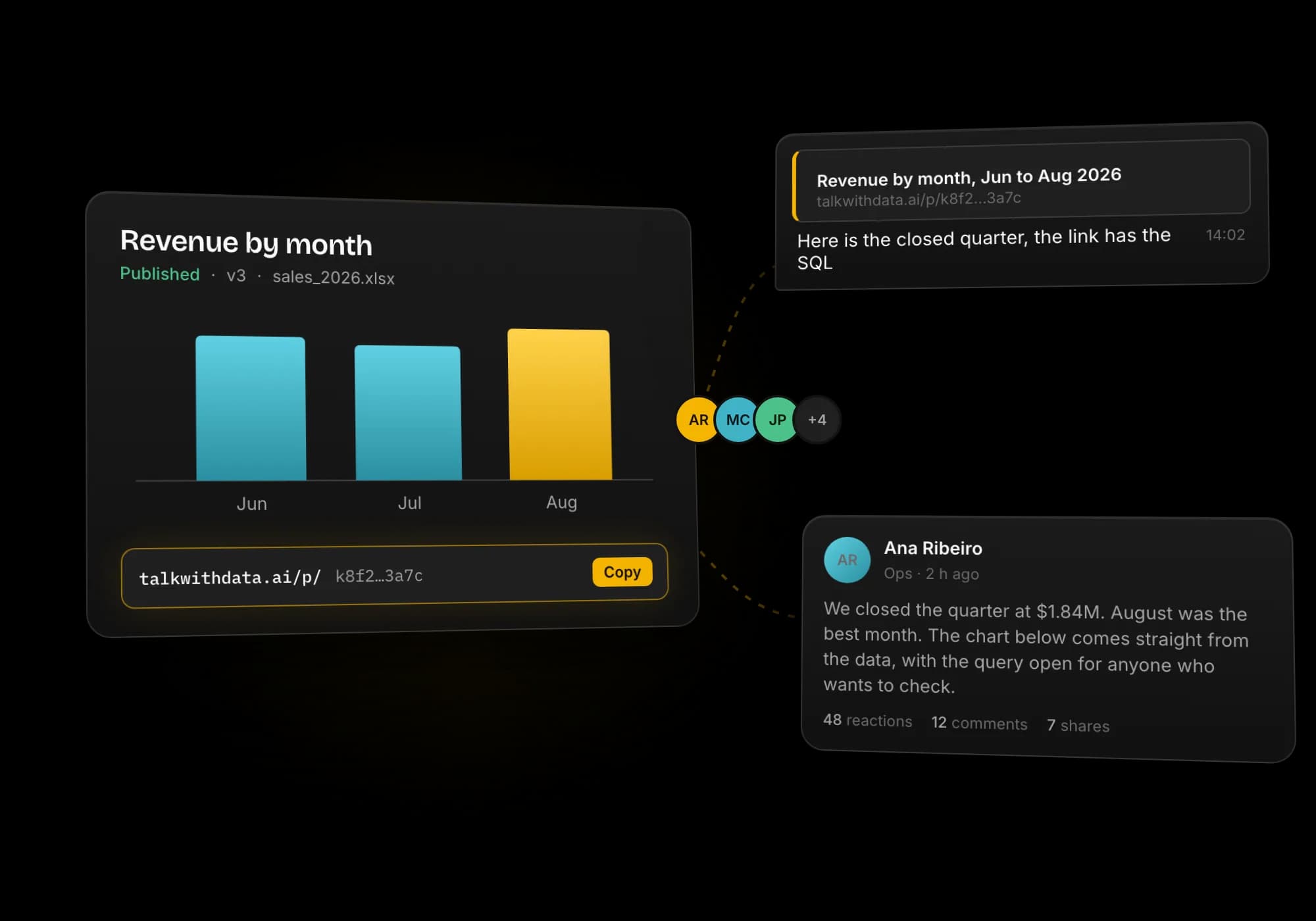
Share the answer, not the spreadsheet
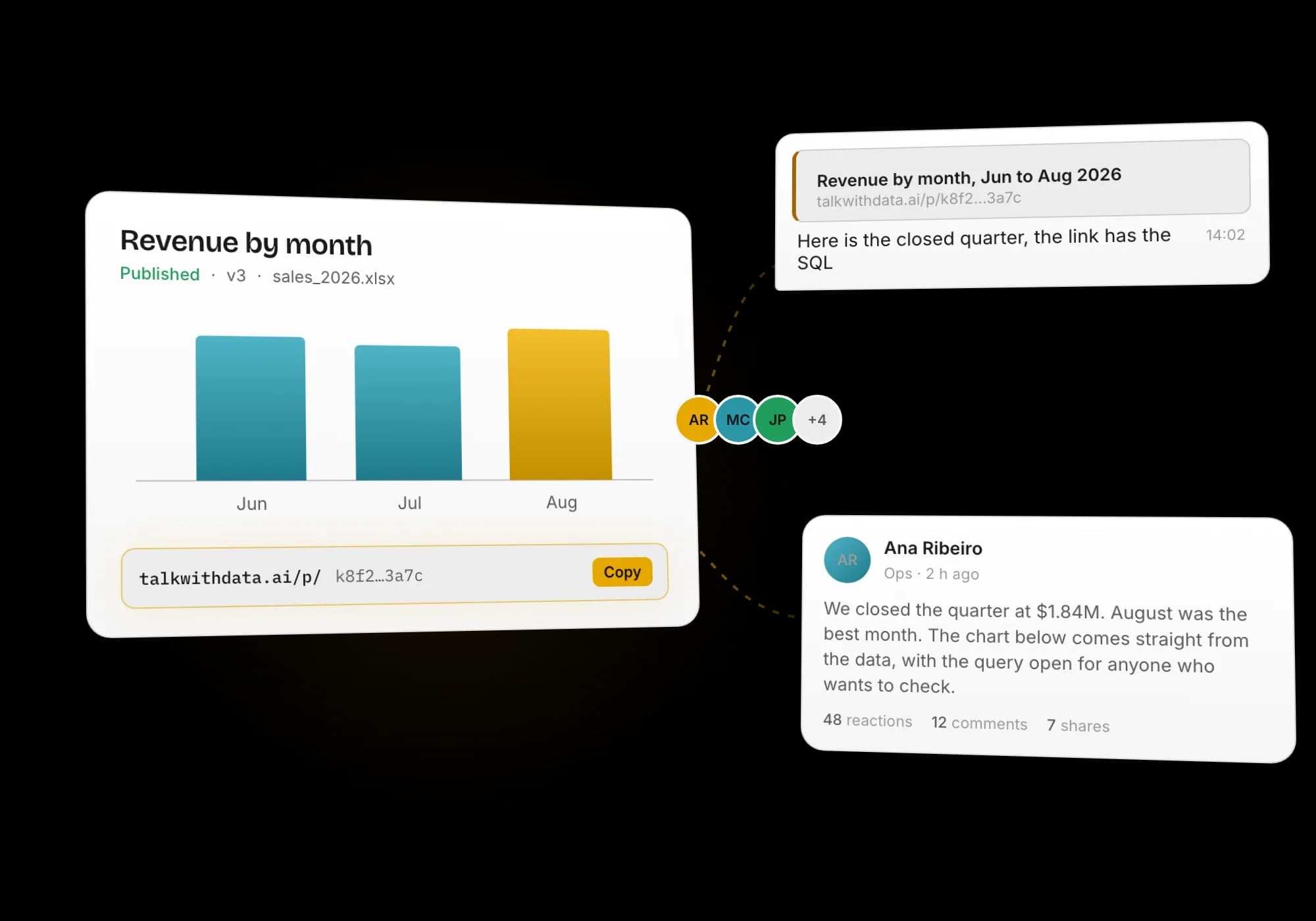
The answer becomes an artifact that keeps the question and the source it came from. Publish it with a link and send it on WhatsApp; when the data changes, ask again and the new version keeps the history.
Privacy and data protection
Full adherence to GDPR and LGPD
We do not ask you to take that on faith. Every control below is published, and most are held in place by a test that fails when the product drifts from the promise.
Your data stays yours while the AI works over it. The query only reads; what reaches the model is the schema with a profile drawn from your data, the result within a size budget, and, for a document, its text. On a connected database, you decide whether the result rows leave at all.
Read-only, always
The generated query passes a guard that admits read-only SELECT and nothing else.
Encrypted in transit and at rest
TLS to the database; the stored connection string sealed with AES-256-GCM.
Result rows, your call
On a connected database, two switches decide whether result rows reach the model, one on your account and one on the source. Either one off, and they do not leave.
Deleting deletes
Account export and deletion exist and are tested on every change.
You can freeze processing
A restriction you can ask for at any time: the product's AI features refuse to run over your data, while reading, export, deletion and sign-in stay open. Most products only offer you the door.
Erasure is exercised, not asserted
A test seeds a full account against a real database, exports it, deletes it, then sweeps the schema for anything left behind. It runs on every change.
Retention runs, it is not just promised
Usage records are deleted after 12 months by a job this very sentence shares its constant with. Off-box backups expire after 30 days — there the deletion is our cloud provider’s lifecycle rule, and this number is a mirror of it, cross-checked by a test against our published retention matrix.
Backups are encrypted before they leave
The daily dump is encrypted on our machine, with our own key, before it is copied anywhere. No key, no upload — it fails closed rather than quietly.
In the cloud, encrypted, under US and EU frameworks
Hosted in São Paulo and reached only over TLS, with your database credentials sealed by AES-256-GCM. Transfers abroad rely on Standard Contractual Clauses, and on the EU-US Data Privacy Framework where the provider is certified. Every subprocessor is named in the published notice — and where one of them does not disclose who it routes onward to, the notice says that too.
The SQL can only read
The generated query passes a guard that admits reads and nothing else. A database you connect is checked against loopback, link-local and private ranges before we accept it, and checked again after its name is resolved.
Rather run it on your own machine? The open source version is MIT, for one organization, on your own server. The platform exists for people who would rather not run infrastructure.